

SHARE THIS ARTICLE
17 Mar 2026
Blockchain Applications and Use Cases Transforming Enterprises in 2026

Blockchain has moved decisively beyond its cryptocurrency origins into the heart of enterprise digital transformation. As of early 2026, over 70% of enterprises are expected to adopt blockchain in some form to drive secure, efficient, and transparent business operations.
What was once associated with niche pilots and proofs of concept has become foundational infrastructure for finance, supply chains, identity systems, digital assets, and more.
For organizations evaluating emerging technologies this year, understanding how blockchain is creating measurable business impact is strategic. Whether you're exploring operational efficiency, risk reduction, customer experience, or new revenue models, blockchain ranks alongside cloud and AI as a priority investment area.
This comprehensive guide walks through the top 15 enterprise blockchain applications and use cases transforming industries in 2026. It includes metrics, practical examples, and insights designed to inform strategic adoption. Along the way, we’ll address common enterprise questions and outline how to choose the right expertise from a blockchain development company for real‑world impact.
1. Decentralized Finance (DeFi) & Institutional Adoption
Decentralized Finance (DeFi) has matured into critical infrastructure for next‑generation financial services. What started as peer‑to‑peer lending platforms has grown into a suite of programmable financial instruments capable of supporting institutional activity at scale.
In 2026, major banks and financial institutions are integrating DeFi protocols for lending, borrowing, trading, and liquidity provisioning without traditional intermediaries. Total Value Locked (TVL) in DeFi is projected to surpass $500 billion, underscoring its legitimacy as infrastructure, not speculation.
Enterprise Use Cases:
-
Peer‑to‑peer lending markets for corporate clients with enhanced transparency.
-
Decentralized exchanges (DEXs) for institutional trading with reduced counterparty risk.
-
On‑chain asset management solutions that automate compliance and reporting.
Traditional finance remains complex and costly. DeFi offers automation, transparency, and liquidity without the cost drag of intermediated systems, a compelling value proposition for treasury teams and financial product innovators.
2. Tokenization of Real‑World Assets (RWA)
Tokenization converts physical or traditional financial assets into digital tokens that can be traded on blockchain networks. In 2025/2026, the tokenized RWA market is expected to reach approximately $30 billion, growing nearly fourfold in two years.
Enterprise Use Cases:
-
Tokenized real estate investments to unlock fractional ownership and liquidity.
-
Digital bonds and securities that eliminate settlement delays.
-
Commodity‑backed tokens that improve price transparency and access.
RWA Tokenization is not just a digital marketing play it is creating new liquidity channels for illiquid assets. Enterprises can expand investor access, lower barriers to entry, and improve settlement times.
3. Supply Chain Transparency & Traceability
Blockchain’s immutable ledger has become a preferred architecture for tracking goods end‑to‑end across global supply chains. Over the past few years, enterprises have deployed solutions that offer real‑time visibility, supplier compliance checks, and provenance tracking.
Enterprise Use Cases:
-
End‑to‑end shipment tracking with verified timestamps.
-
Product origin verification for quality assurance.
-
Counterfeit prevention using cryptographic identifiers.
-
Supplier compliance monitoring across distributed networks.
Example:
Retail giant Walmart reduced food safety investigation times from weeks to just 2.2 seconds by integrating blockchain into its food tracking operations, a powerful testament to how traceability translates to operational efficiency.
4. Cross‑Border Payments & Remittances
International payments have traditionally been slow and expensive due to correspondent banking models and FX costs. Blockchain is altering this landscape by enabling real‑time settlement, near‑zero fees, and programmability.
Enterprise Use Cases:
-
Real‑time international transfers using stablecoins.
-
Global payroll processing across multiple currencies.
-
Cross‑border corporate disbursements without intermediary delays.
The blockchain‑powered remittance market is expected to exceed USD 156 billion prior to 2026, signaling strong enterprise uptake that is driven by flexibility, cost savings, and regulatory progress.
5. Smart Contracts & Automated Workflows
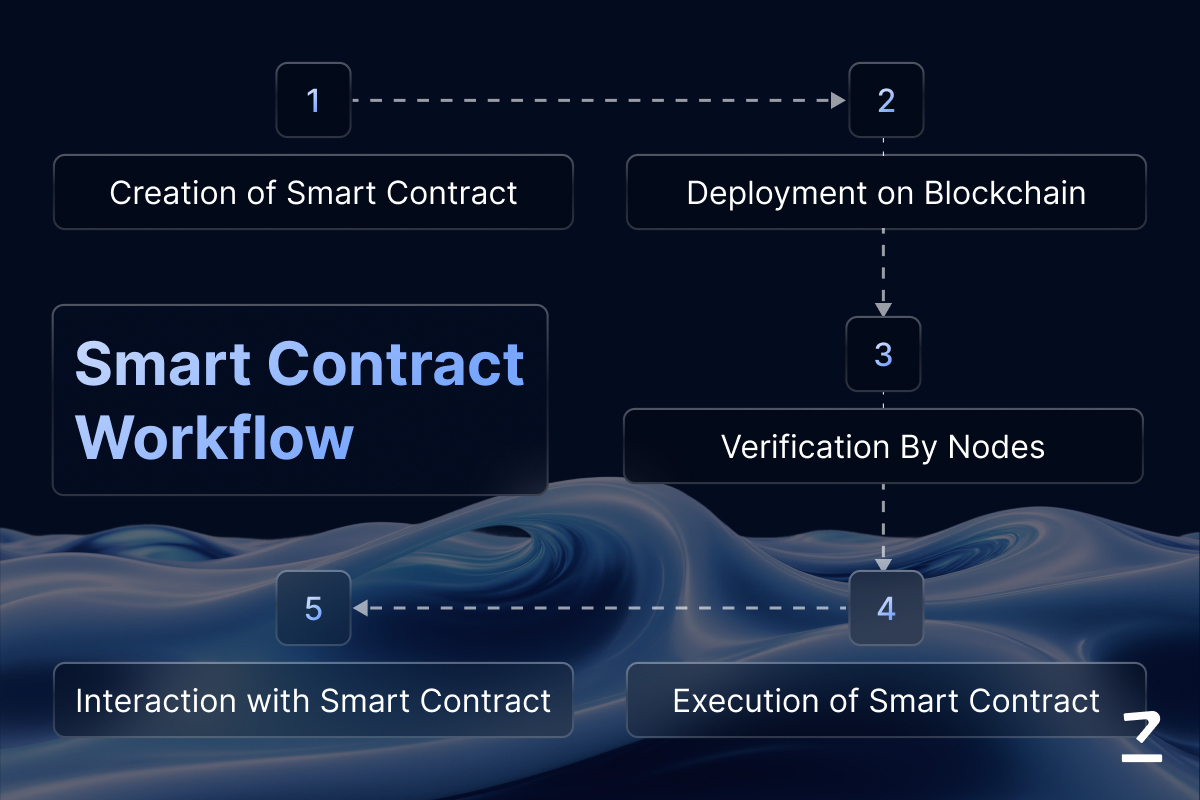
At its core, a smart contract is a self‑executing agreement where terms are encoded as programmable logic. In enterprise settings, smart contract auditing services eliminate delays, reduce errors, and automate processes that were once manual and costly.
Enterprise Use Cases:
-
Automated supplier payments triggered by delivery confirmations.
-
Inventory updates synced automatically with fulfillment milestones.
-
Insurance claims processing that executes payouts once conditions are met.
Current forecasts suggest 95% of enterprise workflows will leverage smart contracts by the end of 2026, illustrating how automation at the protocol level delivers measurable efficiency.
6. Digital Identity & Self‑Sovereign Identity (SSI)
Data privacy and security are top priorities for enterprises, particularly in identity management. Blockchain enables self‑sovereign identity (SSI) where individuals or entities control their own identity data without reliance on centralized databases that are vulnerable to breaches.
Enterprise Use Cases:
-
Secure employee authentication with verifiable credentials.
-
KYC/AML compliance with reusable digital verification.
-
Decentralized access control for multi‑party systems.
SSI enhances privacy while reducing administrative overhead and compliance costs for regulated enterprises.
7. Enterprise Payments & Treasury Management
Blockchain is transforming corporate finance functions by delivering real‑time cash visibility, streamlined reconciliation, and support for multi‑currency operations.
Enterprise Use Cases:
-
Multi‑currency settlements with instant finality.
-
Internal funds transfers between subsidiaries.
-
Automated financial reporting integrated with on‑chain data feeds.
Case studies show treasury teams cutting reconciliation time by up to 70%, enabling faster decision cycles and more agile working capital management.
8. Healthcare Data Management & Pharma Traceability
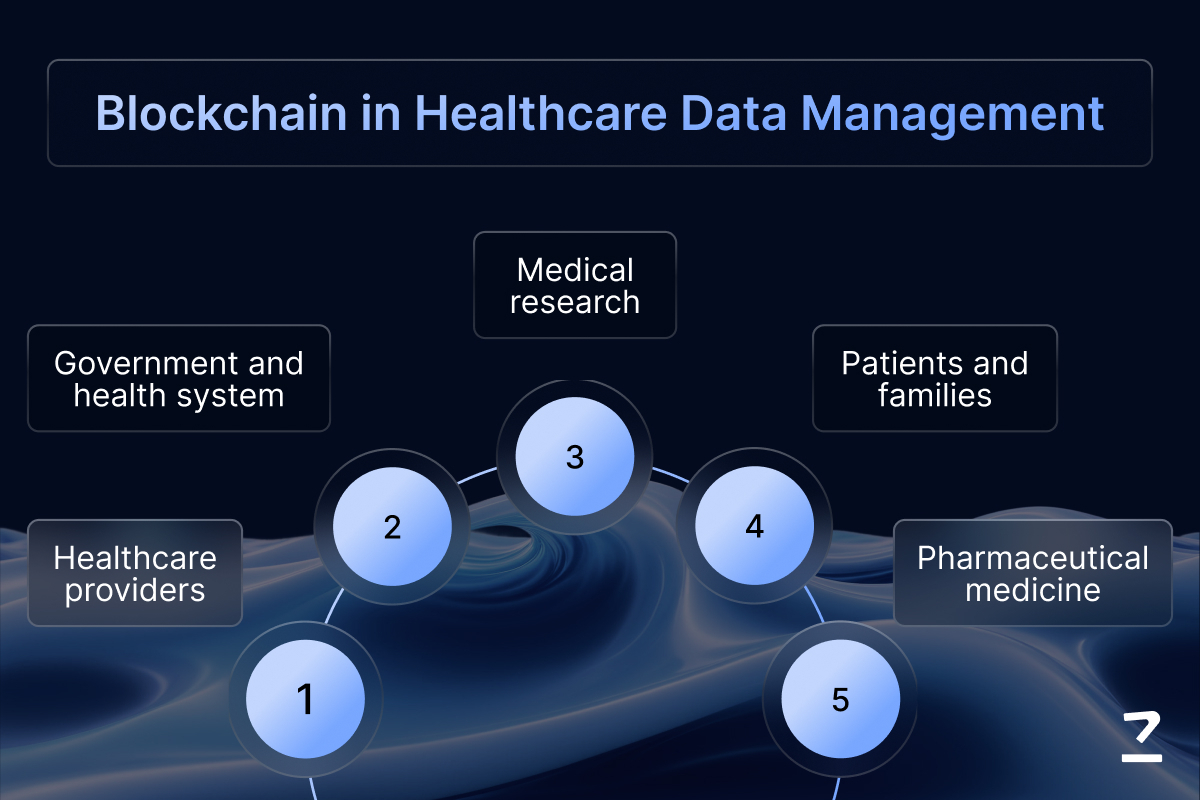
Healthcare systems struggle with fragmented data, interoperability challenges, and risks of data tampering. Blockchain’s tamper‑evident design and secure data sharing capabilities make it ideal for transforming healthcare information systems.
Enterprise Use Cases:
-
Electronic Health Records (EHRs) with patient‑driven access control.
-
Clinical trial data verification to enforce data integrity.
-
Pharmaceutical cold‑chain monitoring to prevent efficacy loss.
Blockchain helps enterprises in healthcare and life sciences enhance trust, compliance, and patient outcomes.
9. Carbon Credits & Sustainability Tracking
Sustainability reporting and carbon accounting often lack transparency and standardization. Blockchain provides auditable, decentralized ledgers to record emissions data and carbon credit transactions.
Enterprise Use Cases:
-
Carbon credit marketplaces with traceable credit issuance.
-
Emission tracking systems with immutable records.
-
ESG compliance auditing for investor and regulatory scrutiny.
Enterprises are increasingly using blockchain to bolster Environmental, Social, and Governance (ESG) reporting with verifiable proof.
10. Insurance Claims Processing & Fraud Prevention
Insurance is ripe for disruption, with claims processing historically slow and vulnerable to fraud. Smart contracts eliminate manual verification steps and automatically enforce policy terms.
Enterprise Use Cases:
-
Parametric insurance that pays based on objective triggers.
-
Automated claims verification without intermediary review.
-
Reinsurance settlements with on‑chain reconciliation.
Blockchain reduces disputes and accelerates claims turnaround, creating stronger customer trust and lower operating costs.
11. Digital Rights Management & Content Monetization
Creators and brands face challenges in protecting intellectual property and enforcing royalty agreements. Blockchain and token standards such as NFTs provide a transparent way to assign rights, track usage, and automate payments.
Enterprise Use Cases:
-
Copyright protection systems with immutable proofs.
-
Royalty distribution triggered by usage metrics.
-
Decentralized marketplaces connecting creators to audiences.
This use case has resonated especially in media, entertainment, and branded consumer engagement.
12. Voting & Governance Systems
Enterprise governance often involves complex voting procedures with limited transparency. Blockchain enables transparent and tamper‑proof voting systems that strengthen stakeholder confidence.
Enterprise Use Cases:
-
Corporate governance voting with auditable results.
-
DAO management for decentralized communities.
-
Shareholder resolutions with enhanced participation.
Immutable audit trails reduce disputes and ensure stakeholders can verify outcomes independently.
13. Gaming, NFTs & Metaverse Economies
Blockchain is fueling new digital economies that reward players and creators directly. In gaming and metaverse environments, true ownership of digital assets from avatars to virtual land is now possible.
Enterprise Use Cases:
-
Play‑to‑earn business models with on‑chain rewards.
-
NFT marketplaces for licensed digital content.
-
Cross‑platform asset interoperability in virtual worlds.
The blockchain gaming market alone is predicted to exceed $65 billion by 2025 a clear indicator of adoption momentum in digital experiences.
14. Internet of Things (IoT) Integration
IoT deployments often struggle with secure device authentication and integrity of sensor data. Blockchain provides decentralized trust anchors for machine‑to‑machine communication without single points of failure.
Enterprise Use Cases:
-
Automated maintenance triggers for industrial machinery.
-
Smart city infrastructure with secure sensor networks.
-
Tamper‑proof data logging in critical systems.
The blockchain IoT market is expected to reach $32.98 billion by 2027, driven by demand for resilient architectures in connected environments.
15. Real Estate & Property Records Management
Real estate transactions are traditionally paperwork‑heavy and prone to delays or disputes. Blockchain introduces digital records with smart contract automation for lifecycle events.
Enterprise Use Cases:
-
Land registry digitization with cryptographic proofs.
-
Property ownership transfers without intermediaries.
-
Automated rental agreements that enforce terms.
These systems reduce friction, enhance transparency, and accelerate transaction cycles in property markets.
How to Choose the Right Blockchain Partner
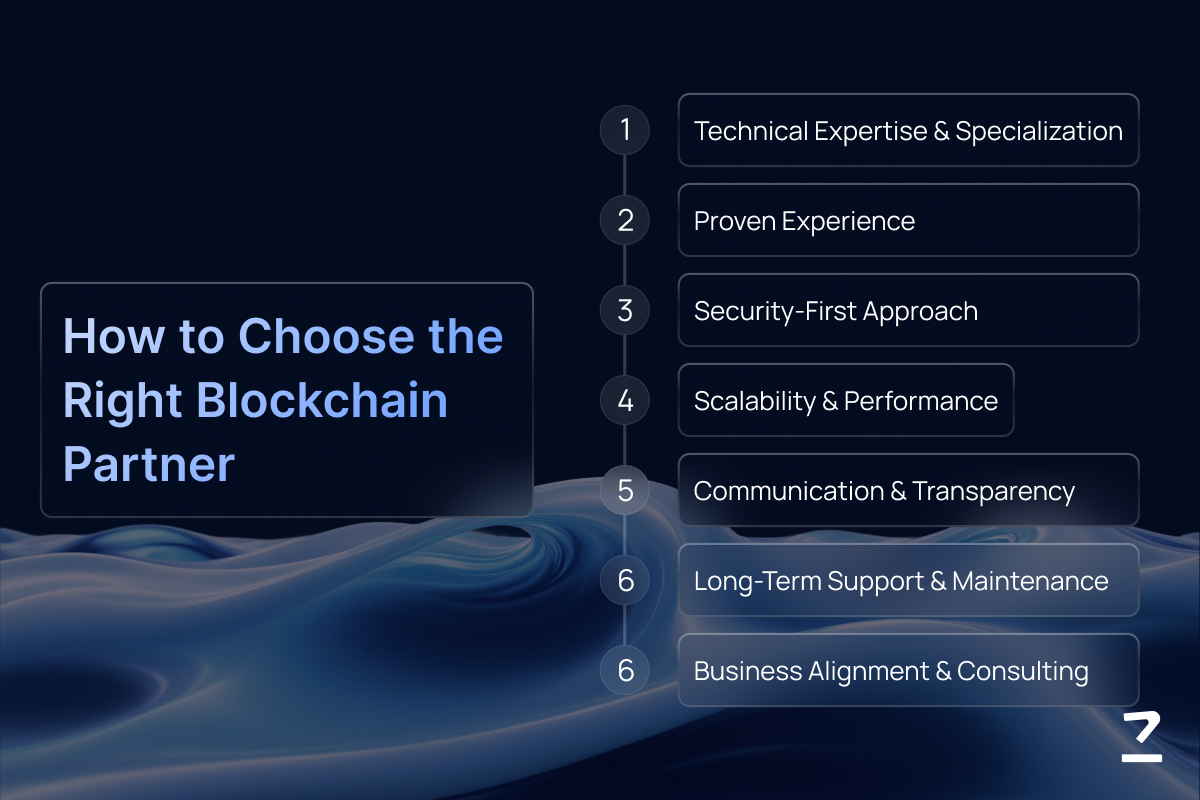
Selecting the right blockchain partner is critical for long-term success. Enterprise blockchain development services are not just about code, they require a combination of technical expertise, strategic business design and risk-aware implementation.
1. Technical Expertise & Specialization
Look for a partner with deep knowledge in the specific platforms and tools your project requires. For example, Ethereum, Hyperledger, Solana, and tools like Hardhat or Foundry. Strong proficiency in relevant languages such as Solidity or Rust is non-negotiable. A specialized blockchain consulting company typically offers more robust solutions than general software developers.
2. Proven Experience
Evaluate their portfolio for live, deployed projects rather than marketing claims or pilots. Real on-chain experience demonstrates their ability to deliver functional, scalable applications. Industry-specific experience adds another layer of assurance.
3. Security-First Approach
Security must be a foundational principle. Confirm their experience with smart contract audits, manual code reviews, and preventive measures against vulnerabilities like reentrancy attacks.
4. Scalability & Performance
A capable partner understands how to design solutions that scale. Assess their ability to handle high transaction volumes, integrate layer-2 solutions, and optimize performance for enterprise-level operations.
5. Communication & Transparency
Effective collaboration requires partners who are transparent, responsive, and provide consistent updates. Clear communication mitigates risk and ensures alignment across all stages of development.
6. Long-Term Support & Maintenance
Blockchain projects are evolving. Ensure your partner offers ongoing maintenance, upgrades, and support post-launch. This continuity is crucial for addressing emerging vulnerabilities and adapting to new business requirements.
7. Business Alignment & Consulting
A top blockchain development service provider goes beyond development. They act as blockchain consulting companies, aligning technological solutions with your strategic goals. Look for capabilities in:
-
Domain experience within your industry vertical.
-
Integration with existing systems and data flows.
-
Compliance, security, and governance frameworks.
-
Strategic guidance combined with hands-on implementation support.
By carefully evaluating these factors, you can select a blockchain development company who not only delivers secure, scalable technology but also drives measurable business value.
Partner with Codezeros for Enterprise Blockchain Success
In 2026, blockchain is integral to enterprise digital strategy, not an optional experiment. Organizations leading with blockchain are unlocking automation, transparency, and new business models across finance, supply chains, identity management, sustainability initiatives, and digital ecosystems.
Whether you're evaluating DeFi integrations, supply chain traceability systems, or tokenization platforms, the right implementation approach matters. Working with an experienced blockchain consulting services partner ensures the technology you build is scalable, secure, and aligned with your business objectives.
If your enterprise is exploring how to transform with blockchain from strategic planning to execution, connect now with us for the expertise, methodology, and delivery capability to bring your vision to life.
Frequently Asked Questions (FAQs)
1. What industries benefit most from enterprise blockchain?
Finance, supply chain, healthcare, insurance, real estate, and energy sectors have seen the most enterprise blockchain adoption due to transparency, automation, and compliance benefits.
2. How long does it take to deploy a blockchain solution?
Small‑scope pilots can launch in 8–12 weeks. Full enterprise implementations typically require 4–12 months, depending on integration complexity and regulatory requirements.
3. Are blockchain systems secure for enterprise data?
Blockchain’s cryptographic design enhances data integrity and immutability. Security is further strengthened with proper governance, identity controls, and access protocols.
4. How can smart contracts improve operational workflows?
By encoding business logic directly into automated processes, smart contracts eliminate manual handoffs, reduce errors, and accelerate execution time frames.
5. What is the difference between public and private blockchains?
Public blockchains are open networks with broad participation and strong decentralization. Private (or permissioned) blockchains restrict participation to known entities, a common requirement for regulated enterprises.
Post Author

Deep Shah
Explore Deep's insightful blog posts that help businesses stay ahead of the curve, explore new possibilities, and unlock the full potential of blockchain technology
Unlock Enterprise Growth with Blockchain Expertise of Codezeros
Unlock operational efficiency, transparency, and new revenue streams with enterprise blockchain solutions. Partner with Codezeros, a trusted blockchain development company, to design, implement, and scale secure, high-performance systems tailored to your business goals. Start your blockchain transformation now and gain a competitive edge in 2026.
Blogs
Our Latest Blogs
Discover valuable industry insights and stay up-to-date with the latest updates by exploring our curated collection of recent blog posts.

Let us know your requirement
We know ideas matter, we are the product of one. We Provide Full Assistance In Your Business