
SHARE THIS ARTICLE
31 Mar 2026
How Blockchain Is Transforming Real Estate Transactions and Property Ownership
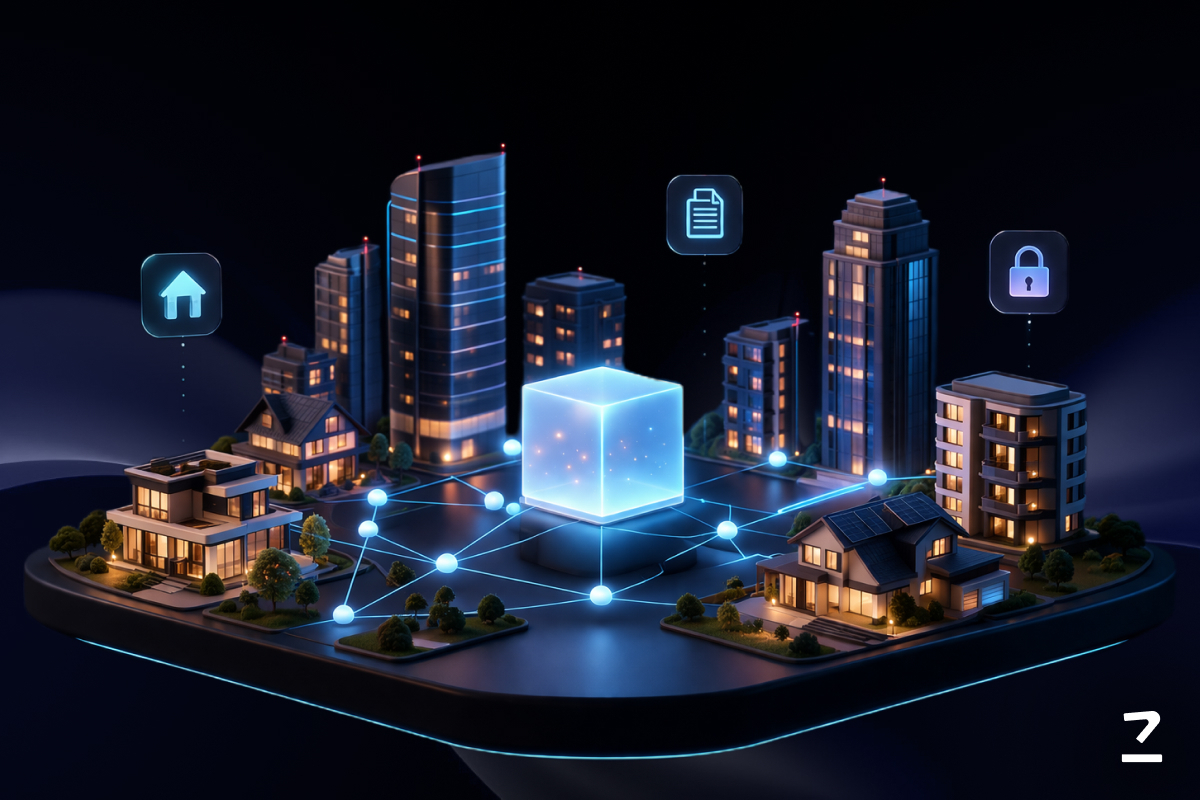
The global real estate industry is one of the largest assets in the world. From residential properties and commercial buildings to land assets and development projects, real estate is a central point in worldwide economic activities.
Despite its massive scale, the way in which property is bought, sold and managed is still being conducted in much the same way it has been for decades. Transactions are still dependent on paperwork, intermediaries and lengthy processes for verification that slows down deals and raises costs.
Today, there is a new technological shift underway that is starting to change the way the real estate ecosystem works. Blockchain technology, originally familiar through cryptocurrencies, is now being developed in industries that utilize trust, transparency and record keeping. Real estate is among the industries that blockchain can bring a major change to.
Blockchain in real estate is becoming a huge thing and the global market is expected to reach $3.8 billion by 2028, and reduce transaction times by 60% and cost reductions of up to 90% in certain pilot programs. These improvements are inspired by the capacity for blockchain to provide transparent digital records, automate agreements through the use of smart contracts and create completely new models of property ownership by tokenization.
Instead of requiring the services of multiple intermediaries to validate documents and even deal with transactions, the use of blockchain technology can allow for the conducting of property deals through secure decentralized systems where ownership records can be modified without anything and agreements become automatically executed. The result is a faster, more secure and more efficient real estate ecosystem.
In this article, we are going to discuss how blockchain technology is revolutionizing real estate transactions, allowing us to own property in new ways and providing opportunities for investors and businesses. We will also examine the role a reliable blockchain development company plays in creating enterprise grade solutions that enable the next generation of real estate platforms.
What Is Blockchain in Real Estate?
Blockchain in real estate refers to the use of distributed ledger technology to record ownership of property, as well as to automate real estate transaction processes and represent digital assets in real estate properties.
At the fundamental level, blockchain is a decentralized database that stores information across a network of computers. Once information is recorded it is extremely difficult to modify, or even tamper with, making it a reliable system of record. In the context of real estate, this technology can be used to replace many of the traditional processes that are currently done with centralized systems and manual verification.
Three important elements make blockchain especially useful for those who deal in real estate transactions.
Distributed Ledgers for Property Records
Blockchain uses a shared and decentralized digital ledger to store the property ownership records, rather than using a single centralized database. This ensures that property information is transparent, easily verifiable and resistant to manipulation. Buyers, sellers, lenders, and regulators can have one place to go for accurate ownership information, which will reduce disputes and make title verification easier.
Smart Contracts for Automated Transactions
Smart Contracts are digital and self-executing contracts that are stored on the blockchain. They automatically activate actions in response when predefined conditions are met. In real estate, smart contracts have the potential to automate payments, the release of escrows and the transfer of ownership, reducing considerably delays, administrative work and dependency on intermediaries.
Tokenization for Digital Property Ownership
Tokenization is the process of converting real estate properties into digital tokens that are stored on a blockchain platform. Each token is associated with a share of ownership in a property, allowing for fractional ownership models. Investors can purchase smaller shares of high-value properties and trade these digital shares more easily, creating a new level of liquidity in the traditionally illiquid real estate markets.
Why Traditional Real Estate Transactions Are Inefficient
Traditional real estate transactions involve manual processes, intermediaries and fragmented record systems. While this model has been in existence for decades, oftentimes, the result is delays, higher costs, and lack of transparency throughout the transaction process.
-
Multiple Intermediaries Increase Costs: Real estate transactions usually involve brokers, lawyers, escrow agents, title companies and banks. Each participant adds in verification steps, fees and administrative complexity, causing transactions to become more expensive.
-
Lengthy Property Transfer Processes: Closing a property deal can be a lengthy process that can take weeks or even months, due to the verification of documents, title searches, financing approvals, and legal coordination.
-
Limited Transparency in Ownership Records: Property records are often held across different databases and institutions. This fragmentation makes the verification of ownership history difficult to execute quickly and accurately.
-
Risk of Fraud and Title Disputes: Forged documents and incomplete records, as well as ownership disputes, can result in fraud or legal disputes. Without a sharing record system it is difficult to verify the authenticity of the property.
How Blockchain Is Transforming Real Estate Transactions
Blockchain is not just digitizing the current real estate processes, it is transforming how property transactions are performed and managed at fundamental levels.
Through the combination of distributed ledgers, smart contracts and digital assets, blockchain provides a streamlined ecosystem for transactions to take place more efficiently and securely.
One of the most important transformations is property verification. Instead of issuing ownership records to multiple institutions which can maintain a different record of ownership, with blockchain, a shared digital ledger exists that offers a single source of truth. Buyers can independently confirm property ownership and transaction history on the spot without having to do extensive research manually.
Another significant change is that of transaction execution. Smart contracts mean that property deals can be made automatically when certain conditions have been met. This automation takes out many of the need to do this manually, cutting delays and minimising the potential for disputes.
Blockchain also helps to increase transparency into the real estate lifecycle. Every transaction logged into the blockchain is thus part of a permanent and traceable record. This transparency helps build trust between participants while helping to prevent fraud.
For investors blockchain creates opportunities altogether. Through tokenization, real estate assets can be split into digital shares that it is more easily for investors to buy and sell. This innovation brings liquidity into a historically tricky market to enter or exit.
Key Use Cases of Blockchain in Real Estate
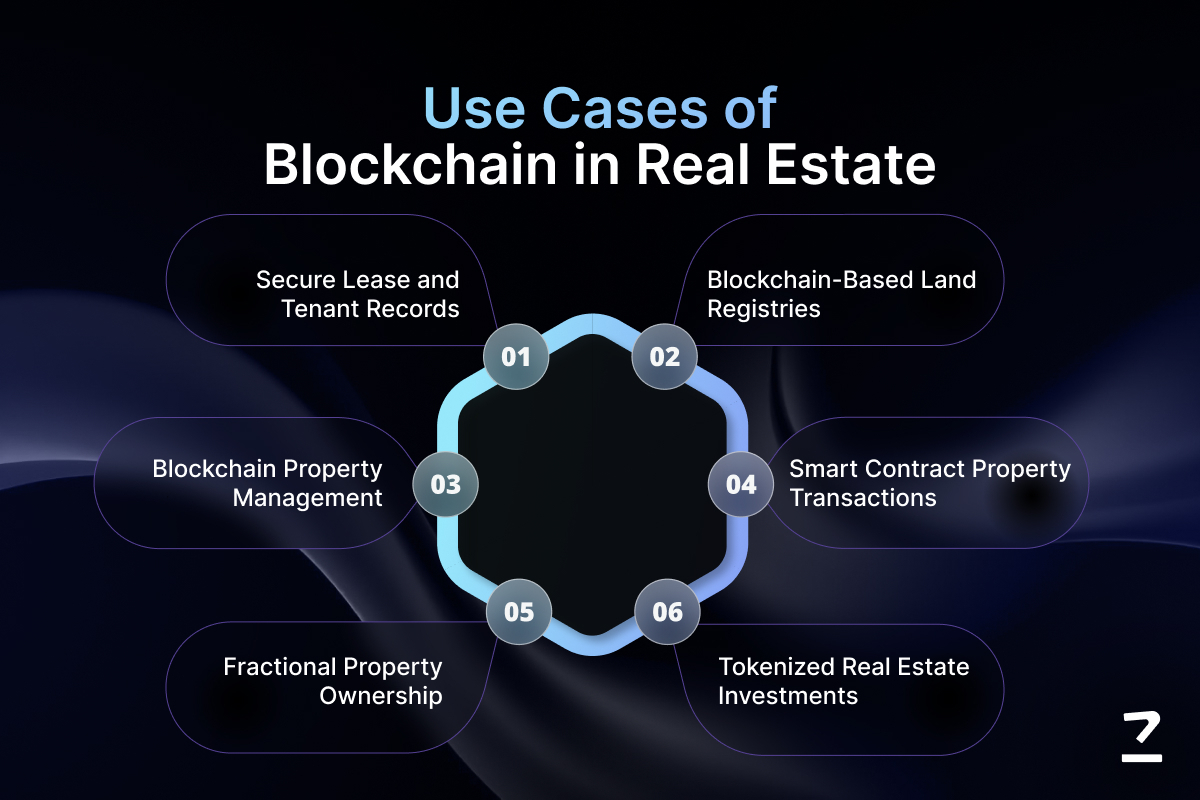
Blockchain technology is being used for several different purposes of the real estate industry, from registering property to investment platforms. These use cases highlight the potential of distributed ledgers and smart contracts to improve the process and open new opportunities to businesses and investors.
Blockchain-Based Land and Property Registries
One of the most powerful uses of blockchain in real estate is the modernization of the land registry systems.
Many governments have centralized databases of property ownership. While these systems serve a critical function they can fall prey to inefficiencies, corruption and data inconsistencies.
Blockchain-based land registries provide a secure and transparent way to record the ownership of property. Each property transaction is logged into the blockchain, which creates a permanent and traceable history of ownership transfers. This system reduces disputes and makes the process of checking the property records simpler.
Several countries already are experimenting with blockchain registries of land to increase transparency and cut administrative costs.
Smart Contract Property Transactions
Smart contracts have the potential to automate a great many aspects of property transactions.
In a real estate platform on the blockchain, a smart contract can be programmed to manage important steps of the transaction process. For example, after the agreed payment has been transferred by the buyer, the smart contract can automatically release the funds to the seller and update the ownership record on the blockchain.
This automation removes the need for the manual management of escrow and minimizes the risk of delays from paper work or administrative errors.
Tokenized Real Estate Investment Platforms
Tokenization enables real estate assets to be tokenized on a blockchain. These tokens can be used to represent fractional ownership of a property, making it possible for investors to buy a smaller share of an asset instead of owning the entire asset.
This way, it lowers the barrier of entry for investing in real estate and enables property owners to tap a wider pool of investors from around the globe.
Tokenized real estate platforms are already emerging, making it possible to buy and trade property-backed tokens via blockchain-based marketplaces.
Blockchain for Property and Asset Management
Beyond transactions and investment, there are other ways in which blockchain can enhance property management operations.
Smart contracts can be used to automate tasks such as rent payments, lease agreements and maintenance tracking. Property managers can use blockchain systems to keep secure records of tenant information, payment histories and contractual agreements.
These capabilities enable less administrative overhead and greater transparency among property owners and tenants.
How Tokenization Is Changing Real Estate Property Ownership
One of the most game-changing ways that blockchain has entered the real estate industry is through tokenization. Traditionally, the ownership of properties is evidenced by legal documents kept in government registries and administered by legal professionals. While this system works, it grants the property market less flexibility, thus limiting liquidity.
Tokenization modifies this model by digitizing ownership rights of a property in the form of digital tokens which are stored on a blockchain. Each token is a portion of the asset and ownership of the asset can thus be split into smaller shares.
This model opens up a number of new opportunities for the real estate industry.
First, tokenization can lead to fractional ownership. Instead of buying a whole property, investors can buy smaller digital shares of a property which represent a percentage of the asset. This is very low barrier to entry for investment into real estate.
Second, tokenization is a labor because it increases liquidity. Real estate is a traditional 'illiquid asset' because sale of property may involve lengthy negotiations, legal approvals and financial arrangements. Tokenized properties may be potentially more tradeable through digital marketplaces, thereby enabling investors to more efficiently buy or sell ownership stakes in properties.
Third, tokenization helps in making real estate markets open to the world. Investors of various nationalities can get involved in property investments without having to go through complicated cross-border ownership deals.
Large-scale commercial projects, luxury developments and real estate investment funds are already looking into tokenization as a way to raise capital and increase the amount of investors.
Implementing tokenization comes with a strong requirement for technology infrastructure and adherence to financial regulations. This is where experienced blockchain specialists along with a blockchain consulting company come in handy in the task of creating a secure tokenization framework.
Step-by-Step Process: How a Blockchain Real Estate Transaction Works
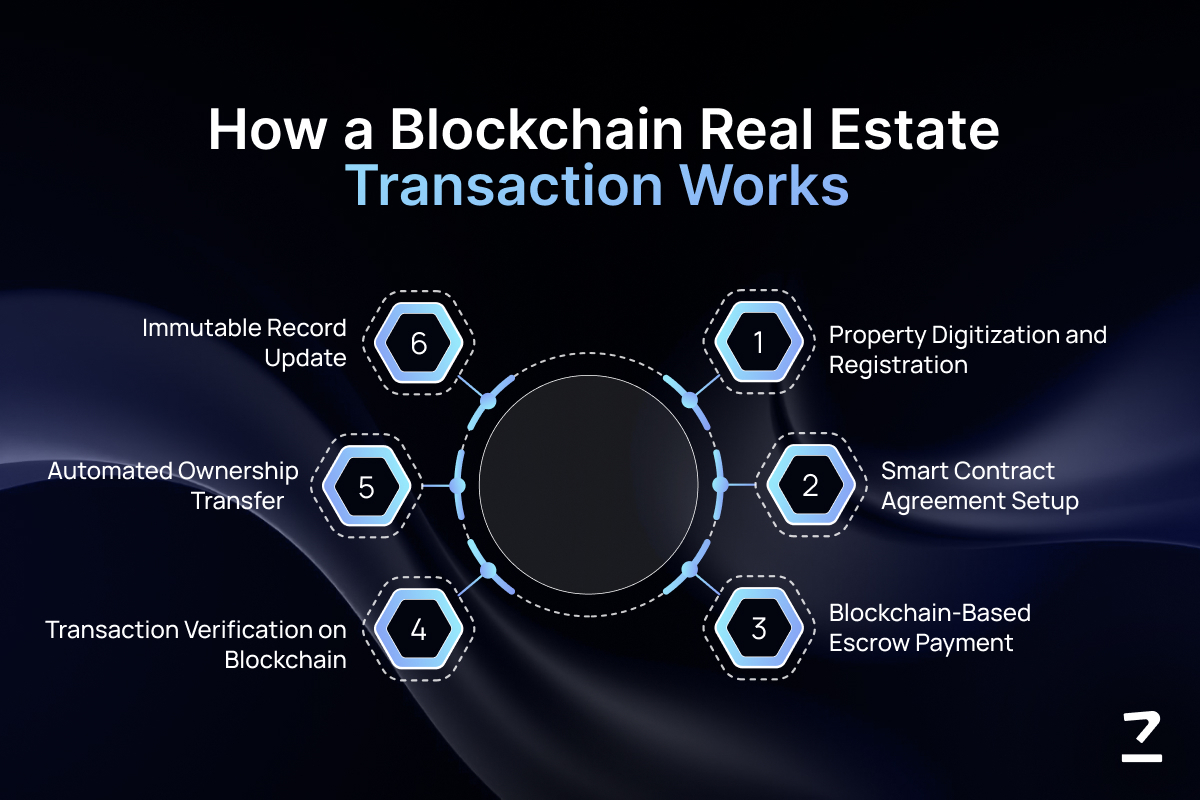
To get a real-world understanding of the effect of blockchain in real estate, it is useful to understand how a blockchain-based property transaction generally unfolds.
While the type of implementation model differs slightly from one platform to the other, most blockchain-enabled transactions generally follow a similar workflow.
Property Digitization and Asset Registration
The first step involves asset digitization of the property asset. Ownership documents, property information and legal information are verified and put down on the blockchain.
This digital record serves as the official copy of the property in the blockchain system.
Smart Contract Agreement Between Parties
Once the property is registered, a smart contract is written out to specify the terms of the transaction. These terms may encompass purchase price, payment terms, escrow conditions and ownership transfer conditions. Because Web3 smart contracts function automatically, they ensure that the agreement is executed in the way it is written.
Escrow Payment Through Blockchain
In traditional real estate transactions, escrow agents receive funds until contract terms are met. In a blockchain based system, the escrow services can be taken care of with the smart contracts. The buyer moves the money into the smart contract and it is locked until all conditions are met.
Automated Ownership Transfer
Once the conditions of payment are met, the smart contract automatically changes the ownership record on the block-chain and transfers money to the seller. This automation eliminates a set of manual processes and also reduces transaction timelines significantly.
Major Benefits of Blockchain in Real Estate
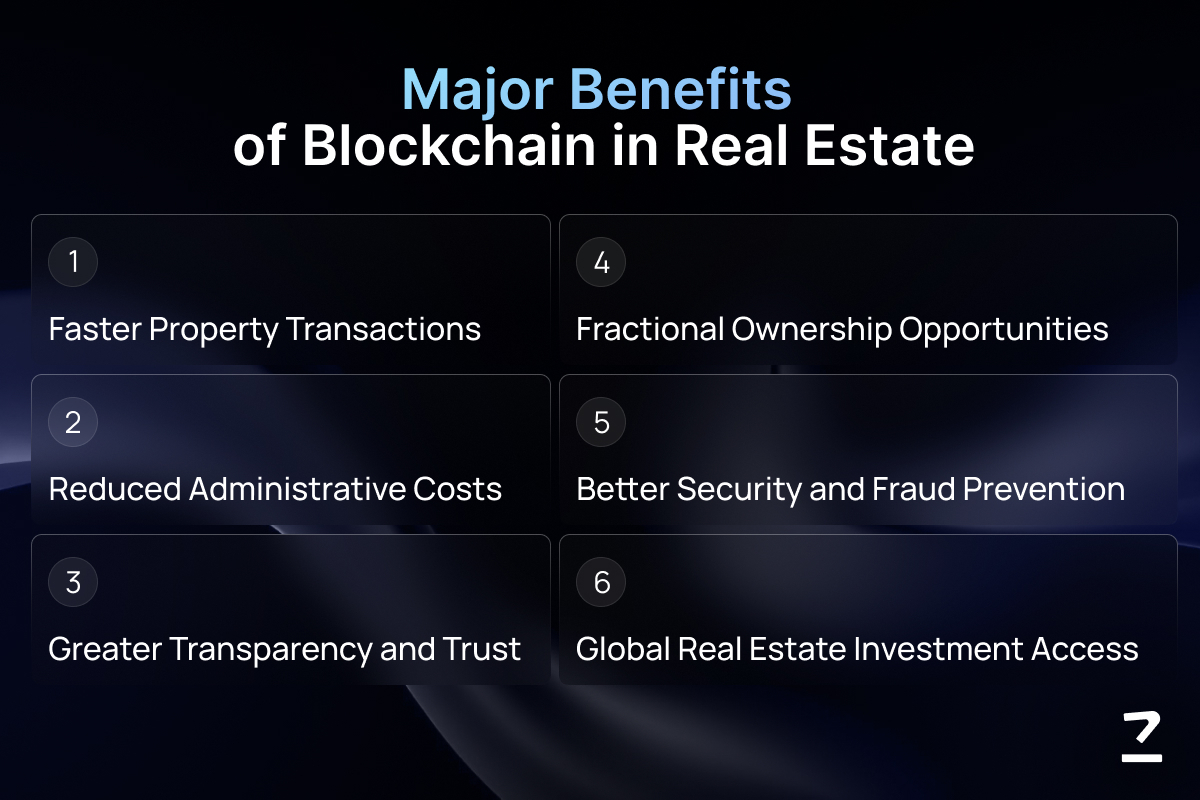
Blockchain's value in real estate comes from its ability to enhance efficiency, transparency and security among the entire transaction lifecycle.
Faster Property Transactions
Traditional transactions of property take weeks or months due to document verification, legal and multiple intermediaries. Blockchain makes such processes easier by storing verified records in a common ledger and automating agreements through smart contracts. As a result, it is possible to potentially complete transactions on properties much faster.
Reduced Administrative Costs
Real estate deals consist of a series of administrative chores such as title checks and escrow management and document processing. These tasks require more than one service provider and account for high transaction costs. Blockchain mitigates these costs by automating a lot of processes and removing redundant verification processes. Some pilot implementing efforts have experienced cost savings of up to 90 percent.
Improved Transparency and Trust
Transparency is the key when it comes to real estate transactions. Buyers want to be assured that sellers have the right to own properties, whereas lenders must be confident about the financial and ownership stand of properties. Blockchain establishes a transparent record of the history of ownership and transaction activity so that stakeholders can independently verify information.
Improved Security and Fraud Prevention
Property fraud and title disputes are ongoing issues in most markets where real estate is involved. Blockchain's unchangeable ledger prevents the change of a once entered record without consensus from the network. This makes falsified changes rearing extremely difficult. Digital records also eliminate the risk of loss in the forgery and unauthorized altering of documents.
Global Liquidity for Real Estate Investments
Tokenization and blockchain marketplaces make it easier for investors to gain access to real estate assets in the world. Instead of tying up their capital in single properties on a large scale, investors are able to diversify their portfolios, thanks to fractional ownership in multiple assets. This accessibility from around the world can open up new funding opportunities for property developers and investment firms.
Enterprise Blockchain Development for Real Estate Platforms
While blockchain technology has a lot of powerful benefits implementing enterprise grade real estate solutions requires careful planning and technical expertise and understanding of regulations.
Real estate firms usually join hands with a blockchain development partner to design and deploy a robust and safe platform as per their functioning requirements.
A professional blockchain development service provider plays a critical role in building scalable infrastructure that helps in property transactions, tokenization systems and compliance frameworks.
Blockchain Infrastructure for Property Platforms
Real estate platforms based on blockchain need to have strong infrastructure that can be used in the transactions of property records, cases, and smart contracts.
Enterprise Blockchain networks can be built to handle high transaction volumes and ensure data integrity and security.
A blockchain development expert can architect systems that would integrate with existing databases, financial institutions and regulatory systems.
Smart Contract Development for Real Estate Transactions
Smart contracts are the backbone of blockchain-based property transactions.
Developing secure and efficient smart contracts involves specialized knowledge and skills in blockchain programming and security auditing. Even small weaknesses in smart contract code can leave platforms vulnerable to financial risks.
Professional blockchain app development services are concerned with designing and testing smart contracts by the standards of enterprise security.
Tokenization Platforms for Property Assets
Tokenization requires infrastructure that can issue, manage and transfer digital property tokens.
These platforms must also follow the financial regulations of securities and asset ownership.
Experienced providers that offer enterprise blockchain development solutions can help positive companies construct compliance tokenization programs that help manage digital assets securely.
Integration With Existing Real Estate Systems
Blockchain platforms hardly ever exist in a vacuum. Real estate companies will have to blend blockchain solutions with current applications like property management software, land registries and financial institutions.
Enterprise integration as a whole ensures that blockchain platforms work comfortably integrated into existing operational environments.
Organizations that are looking for cutting-edge blockchain development services frequently look towards integration capabilities while choosing their technology partner.
Real-World Examples of Blockchain in Real Estate
A number of governments and private organizations are already experimenting with blockchain-based solutions for real estate.
One notable example is the application of blockchain in the commercial real estate sector to land registries. Countries like Georgia and Sweden have toyed with the idea of using blockchain systems to manage property ownership and minimize administrative inefficiencies.
These initiatives focus on developing tamper-proof records in order to make the verification of properties easier and combat fraud.
Another example is that of tokenized real estate projects. Luxury developments and commercial properties have been starting to raise capital through the use of blockchain token offerings - where investors can buy fractional ownership stakes.
Blockchain-based platforms for property investment are also emerging, offering marketplaces for investors to buy and sell tokenized real estate assets.
These real-world uses show the power of blockchain in cutting down processes at the same time as opening access to real estate investment opportunities.
Challenges of Implementing Blockchain in Real Estate
Despite its potential, there are several challenges associated with blockchain adoption in the real estate sector.
Regulatory and Legal Uncertainty
Property ownership laws exist and differ greatly between different countries and jurisdictions. Integrating blockchain records into existing legal frameworks requires regulatory clarity and government cooperation. Without standardized rules and regulations, there may be legal barriers for blockchain-based property systems.
Smart Contract Security Risks
While smart contracts are an excellent way to automate transactions, they present new security considerations. Poorly designed smart contracts can have vulnerabilities that can be exploited by malicious actors. Rigorous security testing and smart contract audit are crucial before smart contract systems deployment.
Infrastructure and Implementation Costs
Transitioning from traditional real estate systems to blockchain infrastructure requires a considerable investment in technology and training. Organizations have to weigh whether the long-term benefits will outweigh the costs of implementation.
Resistance to Industry Transformation
Real estate is an industry that is historically conservative. Many stakeholders are used to traditional processes and might be unwilling to adopt new technologies. Overcoming this resistance will take education, collaboration and demonstration of the tangible benefits of blockchain.
The Future of Blockchain in Real Estate and Property Ownership
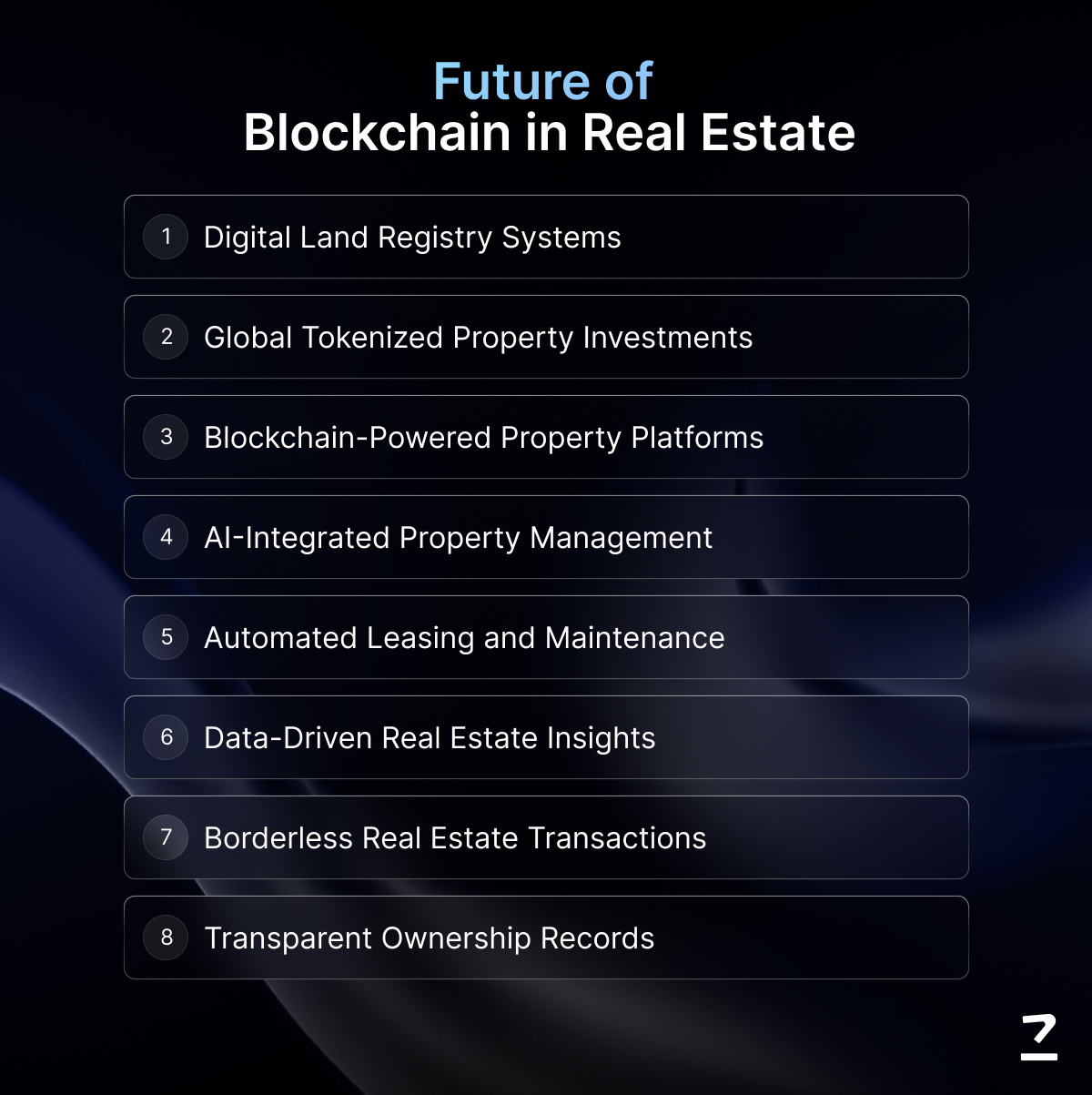
As blockchain technology matures, its impact on the real estate industry can be expected to grow.
A number of trends are likely to define the future of blockchain-based property systems:
First, digital land registries could be the new norm in many countries as they enable secure and transparent ownership records that may be accessed via blockchain networks.
Second, tokenized real estate investment platforms may have the power to unlock the world's capital markets, so investors can invest in property markets, regardless of their geographical location.
Third, the integration of blockchain with artificial intelligence and data analytics could lead to smarter property management systems to automate the processes of leasing, scheduling maintenance and reporting financial data.
These innovations denote that blockchain will provide a central place in the modernisation of the real property industry in the foreseeable future.
Why Businesses Choose a Trusted Blockchain Development Company
For real estate organizations contemplating the use of blockchain, finding the right technology partner is crucial.
A good blockchain development company offers necessary expertise to design secure, scalable and compliant solutions.
Such providers are usually providing services such as blockchain consulting, architecture design, smart contract design, tokenization platform creation, and integration of enterprise systems.
By partnering with a dedicated blockchain consulting firm, real estate businesses can test the viability of blockchain initiatives and determine the most impactful use cases.
Organizations that collaborate with trusted companies that offer enterprise blockchain development services are better able to create platforms that not only comply with regulatory requirements, but also provide long-term scalability.
Start Building Next-Gen Real Estate Platforms with Codezeros Blockchain Solutions
Blockchain technology is changing the real estate industry by introducing new levels of transparency, efficiency and accessibility.
From secure land registries to automated smart contracts and models of tokenized property ownership, blockchain is transforming the nature of real estate transactions.
By eliminating many of the inefficiencies common with traditional processes, Blockchain allows for increased speed of transactions, reduced costs and better trust between the participants.
While there are challenges especially in regulation and industry adoption, the potential benefits of blockchain are great. Governments, developers, investors and tech companies are all looking into blockchain related solutions that have the potential to help update the real estate markets.
For businesses looking to capitalize on these opportunities, working with a trusted blockchain development service provider can help bring innovative ideas to life in scalable platforms that enable the future of property ownership and investment.
Codezeros assists businesses in building next-gen real estate platforms which are powered by blockchain, smart contracts and asset tokenization.
Looking to launch a blockchain for real estate solutions? Connect us to explore secure, scalable and enterprise-ready development solutions for your business.
Post Author

Deep Shah
Explore Deep's insightful blog posts that help businesses stay ahead of the curve, explore new possibilities, and unlock the full potential of blockchain technology
Frequently Asked Questions
Frequently asked questions about this article.
Build Enterprise-Grade Blockchain Real Estate Platforms
Want to modernize property transactions or launch a tokenized real estate platform? Codezeros helps businesses design and deploy secure blockchain infrastructure, smart contract systems, and asset tokenization platforms for the real estate industry. Our experts build scalable solutions that enable transparent property registries, automated transaction workflows, and global real estate investment ecosystems. Connect with Codezeros to transform your real estate platform with enterprise blockchain development.
Blogs
Our Latest Blogs
Discover valuable industry insights and stay up-to-date with the latest updates by exploring our curated collection of recent blog posts.


Let us know your requirement
We know ideas matter, we are the product of one. We Provide Full Assistance In Your Business