
SHARE THIS ARTICLE
22 Dec 2025
The Best STO Frameworks Used by Trusted Development Teams
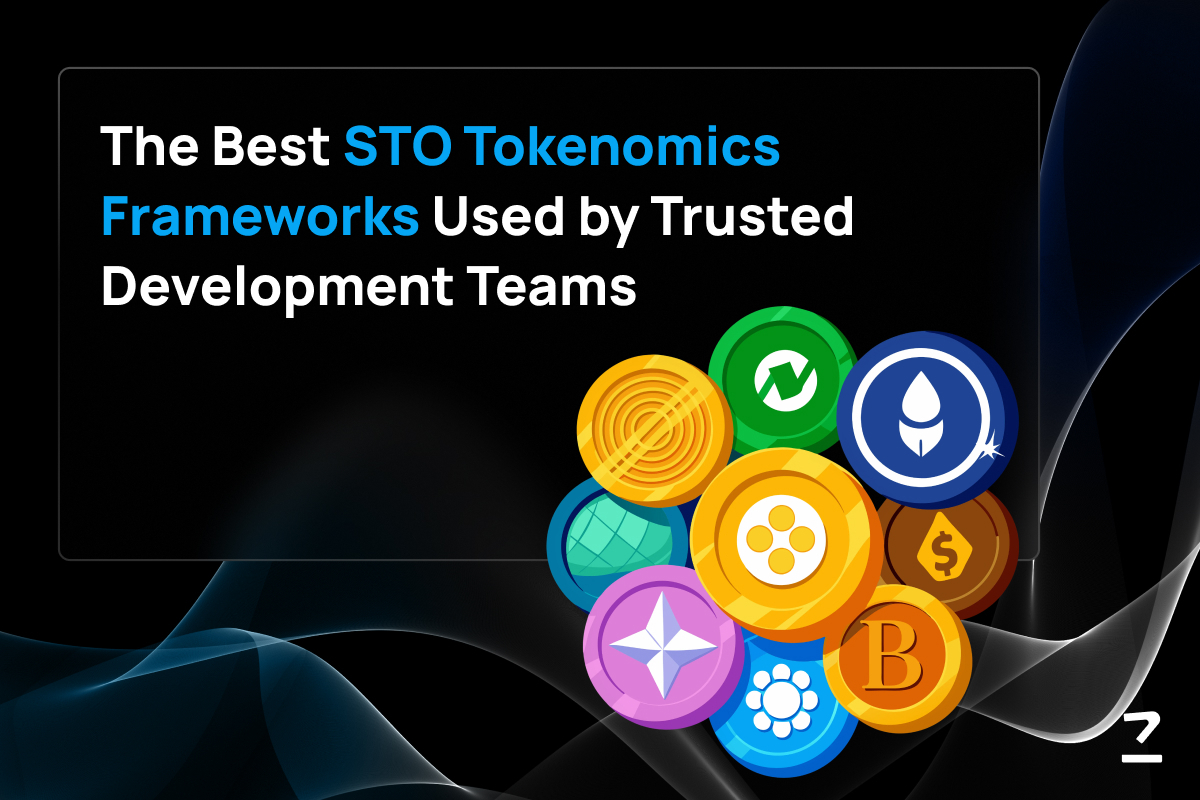
STO has become the game-changing fundraising solution, connecting traditional finance with blockchain technology. While ICOs had no regulations, STOs are fully regulated, offering legal enforceability and investor protection, while benefiting from efficiency and transparency enabled by blockchain.
The global STO market is growing rapidly. Real-world asset tokenization alone surged from $8.6 billion in 2023 to over $25 billion by mid-2025, with estimates suggesting the total tokenized asset market could reach $16–30 trillion by 2030.
Investors are more and more attracted to secure, compliant, and transparent investment means, with 71% of investors exhibiting a preference for STOs compared to traditional or unregulated digital offerings.
Companies exploring digital fundraising often rely on STO solutions services to fill the gap between compliance and blockchain efficiency. The framework of STO not only describes the financial structure of tokens but also includes compliance, automation, and investor protection in its core.
Below, one may find a closer look at the best STO frameworks, core models, allocation strategies, and emerging trends that provide actionable insights for both businesses and developers.
Top Components of STO Frameworks
Effective STO frameworks encompass much more than token creation: they encapsulate compliance, governance, and automation for a legally sound, efficient fundraising mechanism.
1. Compliance & Legal Enforceability
STO starts with regulatory compliance. In contrast to the majority of ICOs, which often operate in a legal gray area, STOs follow the securities regulations and assure legal protection for investors and credibility for the issuers.
A solid STO framework provides for:
-
Jurisdictional alignment: Tokens are designed to be compliant with not only local but also international regulations, including the US SEC rules, MiFID II in the EU, and MiCA guidelines.
-
Legal Enforceability: Every token is a legally enforceable financial claim-equity, debt, profit-sharing right, or otherwise-backed by legally enforceable agreements.
-
Investor confidence: When regulatory compliance is adhered to, it gives a sense of security towards the institutional investors, who then see less risk and, thus, would be willing to invest more capital.
For instance, the Astana International Financial Centre introduced a regulatory framework for Security Token Offering development solutions that guarantees clarity, legal certainty, and investor protection.
The security token exchange, enabled by their regulated environment, managed to raise €6.75 million in just nine seconds-a clear illustration of the potential that compliant digital offerings have.
2. Smart Contracts and Automation
Modern STOs rely on smart contracts as their engine. Automated compliance, dividend distribution, and transfer restrictions reduce administrative costs and operational errors.
Key functionalities of smart contracts include:
-
Automated KYC/AML verification: Only verified investors can take part in the offering.
-
Transfer restrictions: Control programmatically in respect of lock-up arrangements and other jurisdictional limits.
-
Distribution of Dividend and Interest: Automatic distribution enables transparency and reduces delays.
-
Audit trails: Immutable on-chain records enable easier reporting and regulatory validation.
For example, OpenZeppelin provides ERC-1400 or ERC-3643 token contract templates which are audited for security and thus widely adopted in regulated STOs. Compliance engineered into the code frees the issuer to raise funds with ongoing legal and operational integrity.
3. Investor Protection and Onboarding
STOs are centered on investor protection. Accompanying legal compliance, the various frameworks incorporate mechanisms for accreditation, risk assessment, and participation in governance.
Some of the key features about investor protection will include:
-
Accreditation verification: Confirming investors meet income, wealth or professional requirements.
-
Transparent documentation: Providing memoranda, terms of service, and legal agreements in a transparent and accessible manner.
-
Ongoing reporting: Automated tools for quarterly updates, dividend distribution, and performance reporting.
-
Mechanisms for dispute resolution: Making sure investors will have solutions if there is ever a problem that makes them disagree with either a platform or a token.
Taken together, these elements mean investors are more confident, there is less friction in fundraising, and interests are aligned between founders, teams, and participants.
Core Tokenomics Models
Understanding tokenomics models is necessary to structure a sustainable and appealing STO. Trusted frameworks classify tokens into three main categories:
Equity Tokens
Equity tokens are like traditional stocks, as they represent fractional ownership in a company. They offer entitlements to:
Voting rights in decision-making pertaining to governance.
-
Dividend rights that are tied into company profits.
-
Participation in future capital appreciation.
Equity tokens are ideal for startups looking for institutional or high-net-worth investors. They can easily connect with regulated secondary markets to enable liquidity while maintaining compliance with securities laws.
Debt Tokens
The debt tokens work very much like bonds or loans, providing either fixed or variable returns over a pre-defined term. An investor receives:
Repayment of the principal at maturity.
Interest payments automated via smart contracts.
Security against enterprise assets in some constructions.
Debt tokens are attractive to investors who need predictable cash flows with legal protection, and they are a means whereby capital can be raised without equity dilution.
Asset-Backed Tokens
Asset-Backed Token development services are connected with some tangible or intangible assets: real estate, commodities, or intellectual property. Benefits include:
Fractional ownership of high value assets.
-
Improved liquidity for otherwise illiquid investments.
-
Ownership records which are more transparent due to the presence of blockchain ledgers.
This is, for example, reflected in tokenized real estate adoption, which surged as of mid-2025 to include 63% of major firms fully integrating tokenization solutions or with existing pilot programs.
Best-in-Class Platforms for STO Development
Some platforms truly stand out by managing to cleverly mix regulatory trends for compliance, technological robustness, and investor-friendly features in one go.
Securitize
Securitize-sob proprietary STO platform provides an end-to-end suite of tools and services that include:
-
Automation of compliance with the SEC and international standards.
-
Issuance and management of smart contracts.
-
Access to the secondary market through a regulated broker-dealer or ATS.
It has been used by major funds, including BlackRock, for a long time and provides a broad ecosystem for lifecycle management of digital securities.
Polymath
Polymath develops the tokenization of assets with its ST-20 standard and Polymesh blockchain. Among other things, its platform focuses on:
-
Inbuilt KYC/AML compliance.
-
Permissioned token transfers for regulatory compliance.
-
Security and governance of institutional-grade mechanisms.
Polymath has enabled numerous large-scale STOs for real estate, equity, and funds.
Tokeny
Tokeny provides an operating system for global finance focusing on:
-
ERC-3643 (T-REX) standard for regulated issuance.
-
On-chain investor eligibility compliance.
-
Interoperable architecture to support multi-jurisdictional offerings.
Tokeny is particularly strong regarding EU-based offerings and multi-asset class tokenization.
Token Allocation & Incentive Strategies
A well-structured token allocation model is important for sustainability and long-term adoption.
Typical Allocation Structures
As might be expected, common ways of allocating resources in 2025 include:
-
Community & ecosystem incentives: 30–50%
-
Private sale investors: 15–25%
-
Team and advisors: 10–20% (vesting applies)
-
Treasury or reserve money: 10–20%
-
Public sale participants: 5–15%
These allocations balance growth, liquidity, and founder-incentive alignment.
Aligning Incentives for Sustainability
Lock-up periods, performance-based releases, and ecosystem incentivization ensure long-term involvement and prevent early sell-offs. A trusted framework integrates these rules into smart contracts, automating their execution while reducing operational overhead.
Dynamic and AI-driven allocation
Static tokenomics models are very prone to failure in market volatility. Leading frameworks now extend to:
-
Dynamic supply changes pegged to demand or staking activity.
-
AI-driven optimization to predict liquidity needs and market behavior.
-
Algorithmic dividend distribution for more efficient investor returns.
A good example might be how VeChain’s model ties VTHO generation to VET staking levels, making the supply dynamic while rewarding stakeholders in the process.
Trends Shaping the Design of STO Frameworks
The roadmaps followed by a trusted Security Token Offering development company keep on evolving, regarding investor behavior, regulatory clarity, and market dynamics.
Adopting at an Institutional Level
Institutional players are driving demand for regulated digital assets.
-
12% of all real estate firms have complete tokenization; another 46% are in pilots.
-
The adoption of institutional-grade stablecoin infrastructure surged 90% in Q2 2025.
This adoption gives a signal of great confidence in compliant STOs, encouraging broader market participation.
Influencing Regulation
STO structure is shaped by regulations such as MiCA (EU) and guidelines of the SEC in the US:
-
More transparency and reporting.
-
Compelled investor protections.
-
Incentives should be provided to compliant platforms to attract investment from around the world.
Regulatory clarity diminishes risk, quickens pace for adoption, and offers better market efficiency.
Efficiency, Liquidity, and Success in Fundraising
STOs improve operational metrics over that compared with traditional methods:
-
Lower issuance cost: 40% less than in the case of IPO.
-
Faster settlement: In contrast to traditional markets' T+2 or T+3, near-instant transfers take place.
-
Higher fundraising efficiency: Examples like tZERO and NEXO raised tens of millions within hours.
These factors position STOs as a credible high-performance alternative for fundraising.
Choosing the Right Framework
The selection of a proper STO framework involves the consideration of compliance, token economics, and operational efficiency.
Core Attributes of STO Frameworks
A robust framework should:
-
Support multi-jurisdictional compliance.
-
Include automated investor onboarding and KYC/AML.
-
Enforce vesting, transfer restrictions, and dividend distributions programmatically.
-
Offer audit trails and reporting for regulators.
-
Ensure scalability and long-term operational stability.
Balancing Compliance, Tokenomics, and Investor Trust
The optimal STO framework aligns:
-
Regulatory integrity protects investors and provides them with an assurance of enforceable claims.
-
Tokenomics design: Providing maximum liquidity, sustainable token allocation, and incentivizing.
-
User experience: frictionless onboarding, complete transparency of reports, and security of dashboards.
This balance encourages participation, builds credibility, and positions projects for success in the fast-growing tokenized assets market.
Partner with Codezeros for expert STO solutions!
In an era where 71% of investors believe in digital securities with compliance, finding a reliable STO framework would not be a strategic option but an essential one toward long-term growth and market credibility.
STOs are reinventing digital fundraising as blockchain efficiency meets regulated, investor-friendly structure. Pre-trusted tokenomics frameworks provided by players like Securitize, Polymath, and Tokeny embed compliance, automation, and strategic allocation for maximum investor confidence and operational success.
A partnership will be required to help such businesses launch secure, scalable, and legally compliant STOs. Codezeros offers end-to-end development services in the payment system, starting from legal structuring, smart contract development, investor onboarding, and secondary trading controls.
Get in touch today if you're in need of a tried-and-tested approach to sustainable tokenomics and regulatory alignment in your quest to unlock capital efficiently with transparency and trust.
Frequently Asked Questions
Get straightforward answers to the most common questions about Security Token Offering.
Q1: How does a Security Token Offering work?
STOs issue digital tokens on blockchain, which typically represent the ownership or right to real-world assets such as equity, debt, or profit-sharing. Compliance, dividend distribution, and transfer restrictions are automated by smart contracts, thus not only making an investment secure but also transparent and legally binding.
Q2: What is STO in trade?
STO means the regulated issuance and trading of security tokens in trade. The tokens can be issued, sold, or traded on compliant secondary markets for liquidity to the investor while remaining compliant with the securities laws.
Q3: What does STO stand for from a business perspective?
STO stands for Security Token Offering, and it's a method of fundraising in regulated environments whereby companies raise their capital through the issuance of blockchain-based tokens. These tokens represent legally enforceable claims to assets, equity, or profits, in a mix of compliance, investor protection, and efficiency.
Q4: In what way are STOs different from Initial Coin Offerings?
STOs are fully regulated and backed by real-world assets, providing legal protection and enforceable investor rights. ICOs commonly emit unregulated utility tokens, usually involving no regulation or backing with assets.
Q5: What are the processes involved in STO development?
Some of the key steps include conceptualization of the project, legal compliance, designing of tokenomics, selection of a blockchain platform, integration of the KYC/AML process, launch of token, and ongoing support and provision of secondary market liquidity.
Q6: What are the benefits of running an STO?
STOs provide investors and regulators with regulatory compliance, increased liquidity through available secondary markets, fractional ownership in high-value assets, and transparent reporting, all via blockchain.
Post Author

Deep Shah
Explore Deep's insightful blog posts that help businesses stay ahead of the curve, explore new possibilities, and unlock the full potential of blockchain technology
Launch Compliant, Investor-Ready STO Solution with Codezeros
Our experts provide end-to-end services in STO solutions, including the creation of smart contracts, onboarding of investors, and integration with secondary markets. Develop legally secure, and highly scalable tokenized assets trusted by Security Token Offering development company.