

Bringing Trading, Liquidity,
and Token Launches into One DEX
The project was a decentralized exchange on Supra mainnet for active traders, liquidity providers and teams launching new tokens. Codezeros designed and built the platform, covering its smart contracts and user-facing application. It was one of the first DEXs on the network.
Challenge
The goal went beyond token swaps. Traders needed spot and perpetual markets, liquidity providers needed a choice in how they deploy capital, and new projects needed a path from token sale to live market, all within one product.
Liquidity was the clearest example. A concentrated spot position puts capital to work within a selected price range. A vault backing perpetual trades supports leveraged positions and carries a different exposure. The platform needed one coherent experience without confusing those two roles or making users piece together separate products.
There was also no existing Move codebase to build from. Concentrated liquidity and perpetual trading had to be designed and written in Move from first principles, rather than adapted from an existing implementation.

Solution
Codezeros developed the exchange across four areas: spot liquidity, perpetual trading, cross-chain access and token launches. The build covered the contracts behind these functions and the interface through which users access them.
Spot trading and concentrated liquidity
We built concentrated liquidity in Move. Liquidity providers place capital within a chosen price range, across six fee tiers per token pair. The spot market supports swaps, pool creation, range orders, and liquidity mining rewards based on the fees each position generates.
Perpetual trading
The perpetual system is written entirely in Move. It covers order contracts, position management, liquidations, funding and borrow fees, fee distribution, and a vault that backs trader positions. Prices come from Supra's oracle network. Orders are executed by a keeper service we built in Rust. Traders can set take-profit and stop-loss levels on open positions.

Launchpad
Project teams configure and manage their token sale. When a sale reaches its funding target, the launchpad automatically seeds a trading pool and locks the liquidity, so the token can trade as soon as the sale closes.

Cross-chain bridge
We built the Ethereum–Supra bridge end to end: contracts on both chains and the validator network that verifies transfers.
One product
All four areas share one wallet connection and interface. Each runs on its own contracts and liquidity.
Architecture
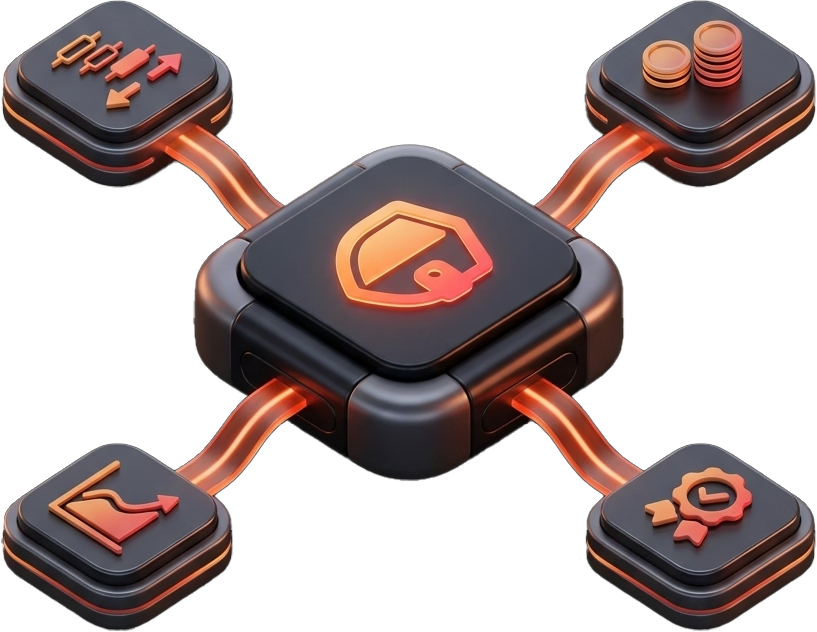
The platform has one user-facing entry point and distinct execution paths. This functional view shows how the parts relate. Users enter through one interface, but each module runs on its own contracts and liquidity. Spot pools, the perpetual vault, the bridge and the launchpad stay separate, so risk in one doesn't spill into another.
User and wallet
Connect and sign
Product Interface
SwapPoolsPerpetualsBridgeLaunchpad
Cross-chain access
Asset entry
Spot trading
Swaps + range liquidity
Perpetual trading
Positions + price data + vault
Token launches
Offering + liquidity path
On-chain execution and settlement
Underlying blockchain network
A user entering through the bridge can then use the available assets in a spot market or another eligible platform flow. Spot swaps draw on trading pools. Perpetual positions rely on price data and their own backing vault. Token launches connect to the liquidity layer when a project moves towards trading.
Tech Stack
- Chain
- Supra mainnet
- Smart Contracts
- Move: Spot, perpetuals, launchpad, bridge
- Perpetual Pricing
- Supra Oracle Network
- Order Execution
- Keeper service built in Rust
- Bridge
- Ethereum↔Supra; own contracts and validators
- Security
- All contracts independently audited
Delivery Facts
- 8-10 monthsTimeline
- 20+ resourcesTeam size
- Audit outcomeAll critical and high-severity findings resolved before launch.
- Ongoing workCodezeros continues to maintain and extend the product.
Outcome
A live decentralized exchange on Supra mainnet, one of the first on the network, combining concentrated-liquidity spot trading, perpetual markets, a cross-chain bridge and an automated launchpad. All contracts were written in Move and independently audited.
If your exchange needs to support multiple trading and liquidity journeys, Codezeros can help define how the components should work together. Tell us what users need to do, and we can start with the platform architecture.